
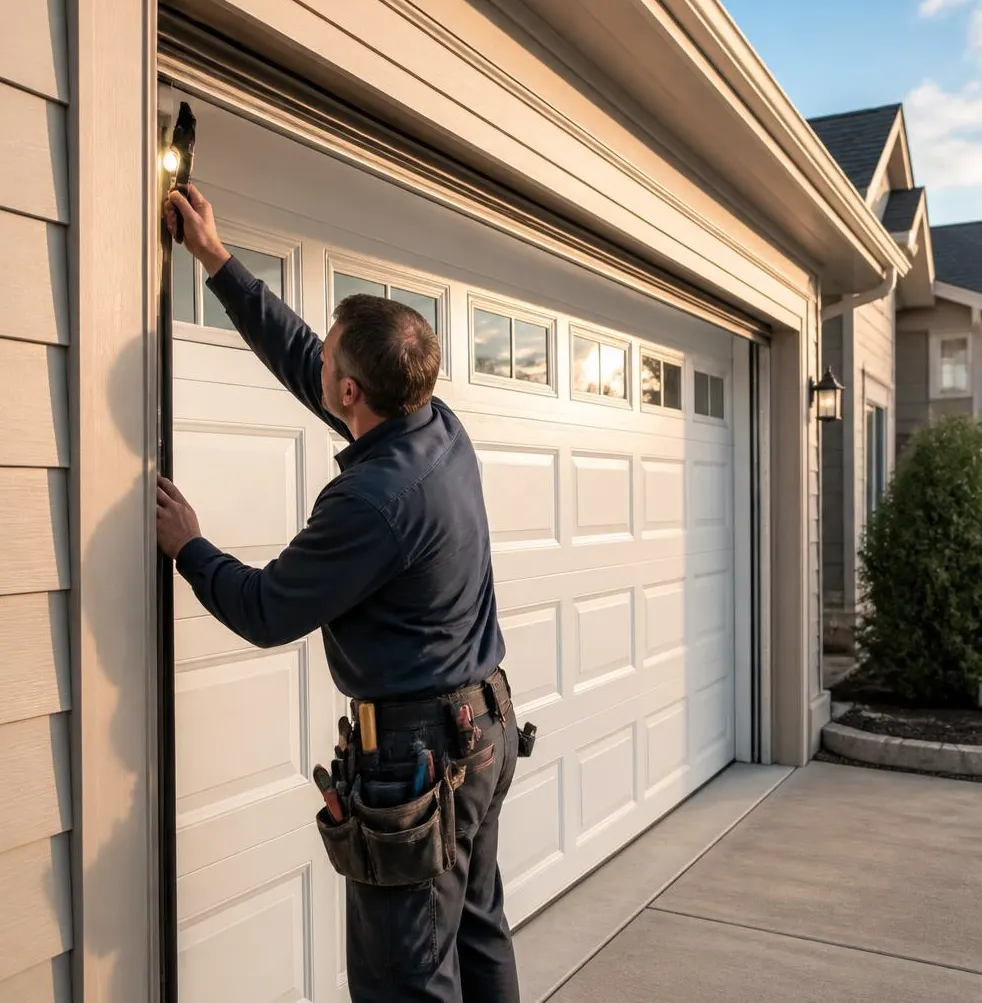
The Call That Starts With "Wait, Who's Supposed to Fix This?"
We get this one a lot: a renter calls about a garage door that won't open, and halfway through the appointment it comes out that nobody's sure who's footing the bill. The landlord says the tenant backed into it. The tenant says it just stopped working one day. Our technician ends up playing referee, pointing at a frayed cable or a dented panel and explaining, as neutrally as possible, what actually caused the failure. Most of these arguments could've been avoided with five minutes of attention on move-in day.
The General Rule of Thumb
Garage doors usually fall under the same logic as HVAC systems or water heaters: the landlord is responsible for maintaining the equipment and fixing things that fail due to age or normal wear. The tenant is responsible for damage caused by misuse, neglect, or accident, and for reporting problems promptly instead of letting a small issue turn into a bigger one.
Typically a Landlord Job
- Spring failure from age or metal fatigue (springs have a rated number of cycles, not a rated number of years)
- Worn tracks, rollers, or cables that have simply reached the end of their life
- An opener motor that quits from old age or burned-out gears
- Panels that are warping or rusting due to normal exposure over time
Typically a Tenant Job
- Damage from backing a vehicle into the door
- Forcing a door that's jammed or off-track instead of stopping and reporting it
- Leaving the door open during a storm and letting wind-driven rain or hail do damage to the interior
- Dead remote batteries, a disconnected keypad, or other small user-side fixes
The lease is the final word here, so if there's language spelling out maintenance responsibilities, that overrides any general rule of thumb. But in the absence of specifics, this is the split most agreements fall into.
What to Inspect at Move-In (Before You Sign Anything)
This is the part that actually prevents arguments six months down the road. Walk through this together, take photos with a timestamp, and keep them somewhere you can find later.
- Test the opener from the wall button and a remote. Listen for grinding, hesitation, or a motor that strains before the door moves.
- Do a manual balance check. Disconnect the opener using the release cord, then lift the door by hand. It should move smoothly and hold its position around halfway up. If it crashes down or shoots up, the springs are already out of adjustment, and that's not something a new tenant should get blamed for later.
- Look at the springs without touching them. Rust, visible gaps in the coils, or a spring that looks stretched compared to its neighbor are signs of age, not misuse.
- Check the weatherstripping along the bottom and sides. In a region that gets dust, wind, and sudden storms, a worn seal lets grit and water into the garage fast, and it's cheap to replace but easy to blame on the wrong person if it's not noted up front.
- Photograph every panel for dents, cracks, or hail damage. Hailstorms are common enough here that pre-existing dings are worth documenting before they get pinned on the new occupant.
- Confirm the remotes and keypad are programmed and note how many remotes exist. Lost remotes at move-out are a classic dispute.
Why Timing Matters Right Now
Heading into the colder months, metal springs stiffen and become more prone to snapping, especially if they're already near the end of their service life. A door that seemed fine in October can fail on the first genuinely cold morning. If the balance test during move-in felt off, it's worth addressing before winter rather than after a 2 a.m. spring failure nobody wants to claim responsibility for.
When to Call Arlington Garage Door Service
If the move-in inspection turns up a door that's out of balance, springs that look worn, or an opener that's clearly struggling, get it evaluated before anyone moves boxes in. We offer Garage Door Maintenance visits that document the current condition of springs, cables, and tracks in writing, which is useful for both landlords and tenants who want a clear record. If a spring is already showing age or damage, our Spring Replacement service handles it properly rather than leaving a liability question hanging over the lease.
Whether you're a landlord prepping a property or a tenant trying to protect your deposit, call Arlington Garage Door Service and we'll give you a straight answer on what's wear, what's damage, and what needs fixing before it becomes a bigger argument than it needs to be.